The Bridge and the Truck
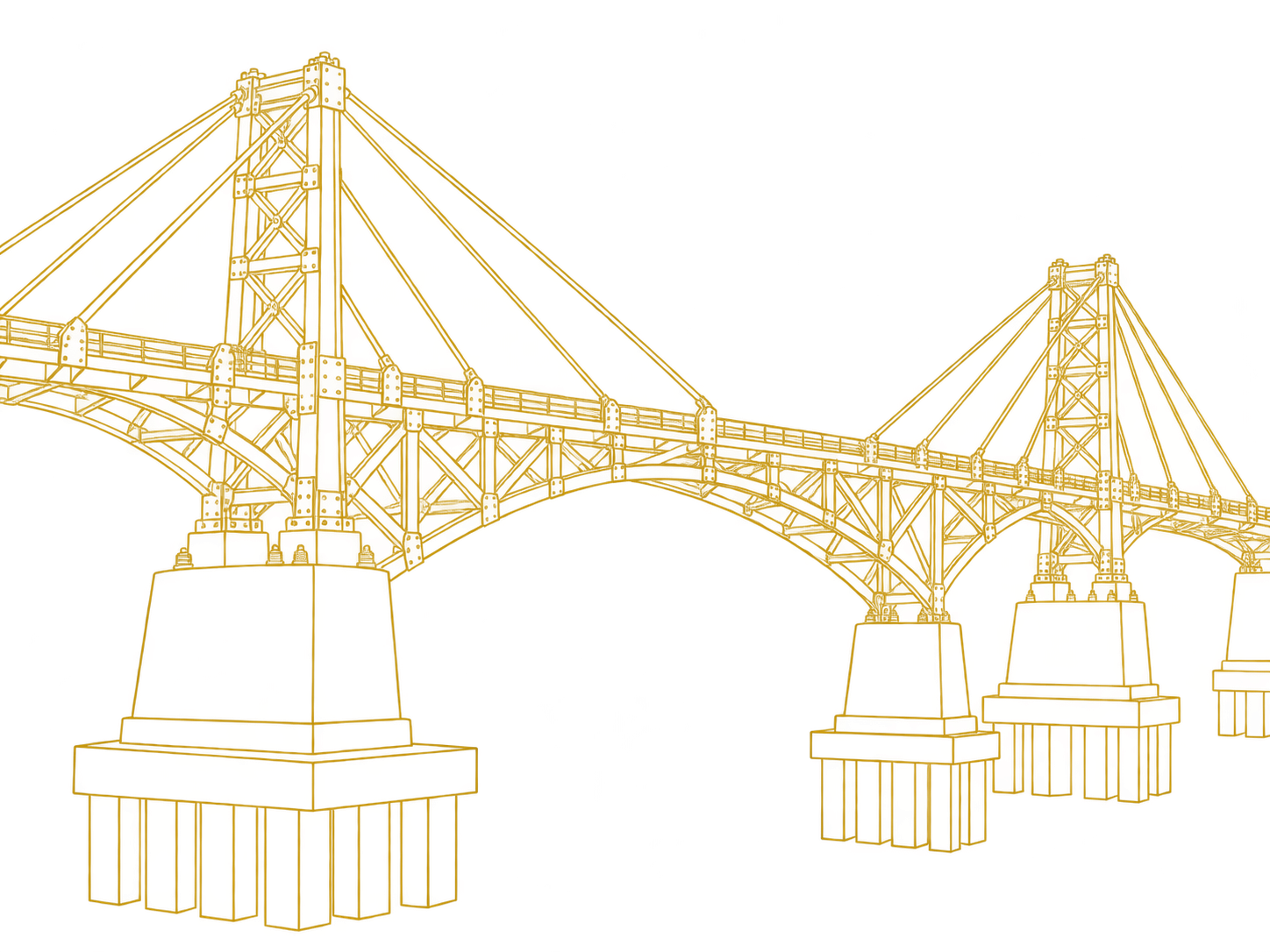
The truck
Every business is trying to get somewhere. Grow. Add a product. Buy a competitor. Put in a new system. Open a market. Whatever the plan is, picture it as a truck, loaded, pointed at a bridge. The bridge goes from where the company is to where it wants to be.
The truck is going to cross. Somebody decided that. The question nobody can answer is whether it’s going to make it.
Two things nobody knows
To know whether a truck can cross a bridge, you need two numbers.
What does the truck weigh? Not what the paperwork says. What’s actually in the trailer. Most companies have a manifest (a plan, a budget, an org chart, a set of procedures), and they’ve never opened the trailer to check it against what’s back there.
What can the bridge hold? Not what the drawings say. What the iron actually bears today, after years of use, patches and repairs nobody wrote down.
Here’s the catch. Knowing one of these without the other is useless. A perfectly weighed truck on a bridge of unknown strength is a guess. A perfectly rated bridge under a truck of unknown weight is a guess. You need both, or you have nothing.
Most companies have neither. They cross anyway. The ones that make it call it strategy.
It’s the same iron
Now the part that changes everything.
Ask what the truck is actually carrying.
Say the plan is “grow 30%.” What’s in the trailer? Thirty percent more orders coming through the same order desk. Thirty percent more loads through the same dispatchers. Thirty percent more invoices through the same accounting team, on the same spreadsheet. Thirty percent more exceptions handled by the same three people who know how. The load isn’t a number in a budget. It’s more weight on every joint the company already has.
Now ask what the bridge is made of. The same order desk. The same dispatchers. The same accounting team. The same three people. The same spreadsheet.
The truck is hauling iron across an iron bridge, and it’s the same iron. The plan is made of the company’s people, processes, systems and habits. The company is its people, processes, systems and habits. When you ask “what does the load weigh,” you’re asking how the business actually works under more pressure. When you ask “what can the bridge hold,” you’re asking how the business actually works, period.
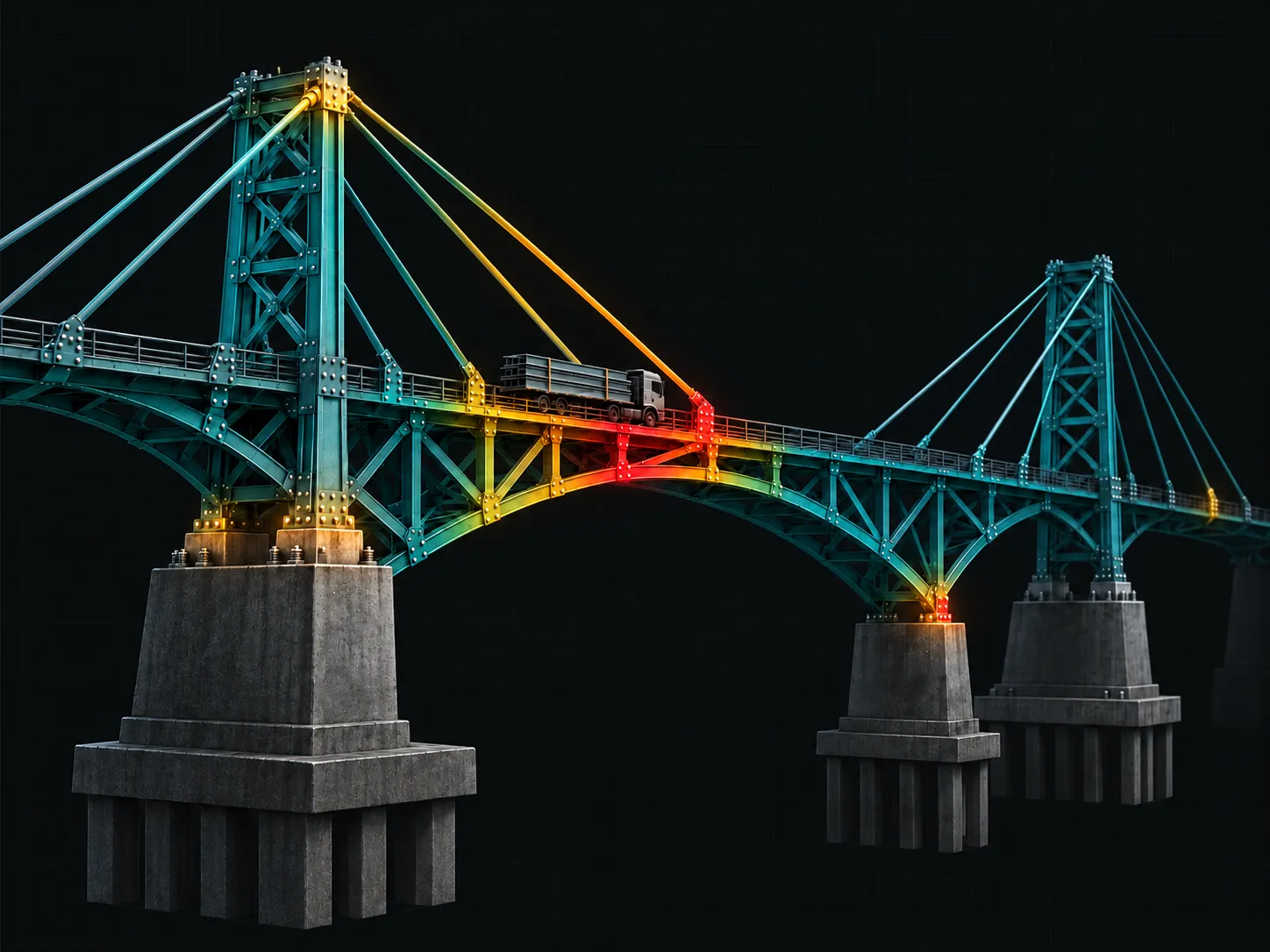
So it isn’t two questions. It’s one. What is the iron made of? Answer that, and both numbers fall out of the same answer. You don’t need a weigh station and a bridge inspector. You need one honest look at the iron.
Engineers have a word for that look: the spec. The spec of the iron is the honest, detailed, tested description of what it is and what it can take. Every business has one. Almost none have ever written it down.
The spec is a thousand questions
The spec of a business is the answer to about a thousand questions. Who are your customers? What do you sell? How is it priced? How does a deal get signed? What happens the day after? Who takes the order? Who delivers? When do you bill? When do you get paid? What happens when something goes wrong?
Prospect to sale to order to cash, every step. Every business, whatever it makes, has to answer roughly the same thousand questions to get from one end to the other.
The interesting thing is that the questions are knowable in advance. What’s different, company to company, is two things: the answers (who does what, how, with what), and how the weight is carried. Two companies can give the same answer to “who approves an invoice” and still be nothing alike. At one, the weight sits on a system with three people behind it. At the other, it sits on one person and a spreadsheet. Same question, same answer on paper, completely different bridge.
That means the questions can be brought to the bridge. The answers, and where the load actually lands, have to come from the bridge.
Bolts and spans
Some answers are small and solid. “Maria enters the orders in the system.” That’s a bolt. You can walk up to it and put your hand on it.
Some answers are big and made of other answers. “It takes us 42 days to get paid.” That’s a span. It has no strength of its own. It’s only as strong as the bolts under it: how orders get entered, how invoices go out, who approves what, how collections get chased.
Every span has to rest on bolts. When it doesn’t, when a company believes something big about itself and nobody can point to the small things holding it up, that’s a weld nobody can find the bolt behind. The company is standing on it. It’s reporting fine. Nobody knows what it’s attached to.
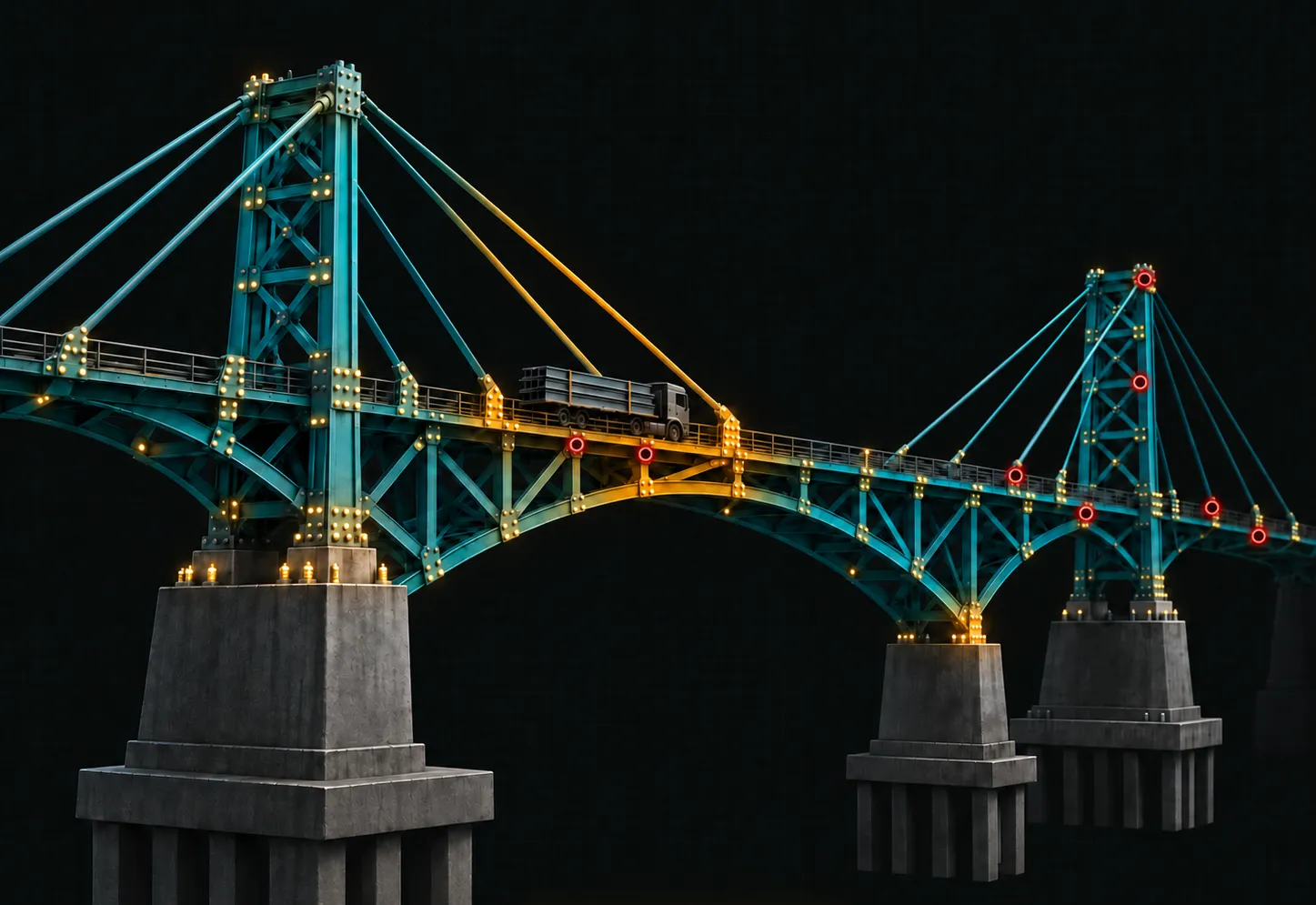
That’s where bridges give way.
Who knows the bridge?
Here’s the honest answer: nobody. And everybody.
The CEO knows the span. The controller knows why accounts receivable has two approval steps instead of one: there was a write-off in 2022. The ops lead knows why that beam has a patch on it: the system upgrade broke a handoff, someone built a spreadsheet to bridge it, and the spreadsheet is still there. The order-entry person knows which “approval step” nobody actually checks.
None of them knows the whole bridge. All of them know why their piece is the way it is.
It comes down to wide and deep. Some people know the bridge wide. They can see the whole span from one bank to the other, but they only know it deep in a few pockets, usually the joints that hurt them once. Everywhere else, they know the drawings. That’s the CEO. That’s the ops manager. Other people know the bridge deep: every bolt in their six feet, and the reason for each one. But they couldn’t tell you what’s on the far bank. That’s the controller. That’s the person at the order desk.
Nobody is wide and deep. That isn’t a failing, and it isn’t anyone’s job. It’s just why the spec of the iron isn’t in anyone’s head. It’s spread across every head in the company, one joint at a time, and it has to be put together rather than asked for.
Bob’s railing
So how does the company actually inspect its bridge?
It asks Bob.
“Hey Bob, how’s it look over there?”
“Looks great.”
Bob is looking at his six feet of railing. Does Bob know bridges? Does Bob know iron? No. Bob knows that his section looks like it did yesterday, a truck went across this morning, and it didn’t fall in. So another truck can probably cross too.
That’s not Bob’s fault. Bob is a deep person being asked a wide question. “How’s it look over there?” is a question about the whole span, put to a man who knows six feet of it. He answers the only way he can.
Every section has a Bob. Every Bob gives the same report. The CEO adds them up and calls it an inspection.
That’s not an inspection. That’s a survey of who hasn’t fallen in yet.
Bob’s story
Let’s make Bob real. You run a 500-truck trucking company. You hire Bob to be a dispatcher.
Bob has dispatched before, at another carrier. He arrives with habits: some good, some that were fixes for problems his old shop had and you don’t. Nobody knows which are which. Bob doesn’t either.
Day one, you hand Bob the procedures manual. It was written when you had 200 trucks, by a manager who left three years ago. It describes a check-call routine nobody has followed since the new tracking system went in. Bob doesn’t know that. To Bob, this is how the company works.
Day two, you say “go sit with Cindy.” Cindy has been here eight years. Cindy knows the fast way around the Laredo yard. Cindy keeps her own spreadsheet of which brokers actually pay detention. Cindy skips step four of the manual, because step four broke when the system got upgraded. Bob learns whatever Cindy happens to show him in eight hours, in whatever order the phone rang. Half of what she knows. In no particular order. Some of it specific to Cindy’s accounts, though nobody says so.
Day three, Bob is dispatching your trucks. His way is now his old habits, plus an outdated manual, plus half of Cindy, mixed. Nobody has checked it. Nobody will.
Six months later you hire another dispatcher and, of course, you have them sit with Bob. Now the company’s dispatch process is Bob’s way, not because anyone compared it to anything, but because Bob was available and nobody’s complained.
Meanwhile Bob is applying Cindy’s special account rules on every account, because nobody told him they were special. A new customer comes in and Bob handles it the way his old carrier would have, because nothing else covers it. Accounting is losing its mind because every dispatcher’s paperwork looks different and nobody can bill consistently. So accounting builds a spreadsheet to translate three dispatchers into one invoice. Now there’s another patch on another beam.
Stop here and notice something. Nobody in this story is lazy. Nobody is incompetent. Bob is doing his best with what he was handed. Cindy built the workarounds because the system broke and the trucks still had to roll. Accounting built the spreadsheet because the invoices still had to go out. The manager put the new hire with Bob because Bob was available and things seemed fine. Everyone is working hard, solving the problem in front of them, and surviving the day. That’s exactly how it happens.
The bridge doesn’t drift because people stop caring. It drifts because people care enough to patch it and nobody has a place to write the patch down.
The new system
Everyone agrees: the dispatch software is terrible. We need a new one.
The new supplier’s team arrives to learn how the company works. They interview Cindy. She’s been here longest, so she must know. Cindy tells them her way, with total confidence, because to Cindy that is how the company works. Her account-specific rules. Her step-four workaround. Her spreadsheet logic. The supplier writes it all down as requirements. Leadership reviews the requirements and nods. It matches the manual closely enough, and Cindy’s been here eight years.
The CEO signs. Seven figures. Eighteen months.
Three months in, Cindy leaves. Eight years of how the company actually runs walks out in one person. The spreadsheet is on her laptop. The requirements the whole project is built on came from her, and now there’s nobody to ask what she meant.
The first cracks show up in the configuration meetings. Bob and the new dispatcher start asking questions. “Why would the system make me call at every stop? We don’t do that.” “This approval step: who actually does this? I’ve never seen anyone do it.” “Where do I put the detention note? I put it in the comments.” Their questions don’t sound like what Cindy described. They don’t sound like what the manual says. They don’t sound like what leadership described in the sales meetings. The supplier’s team hears objections to the requirements. Leadership hears dispatchers resisting change. Nobody hears what it actually is: two people describing a bridge that doesn’t match the drawings, out loud, in the room, while there’s still time.
Go-live. Bob’s accounts break because the new system enforces Cindy’s rules on them. The night dispatcher’s whole process isn’t in the system, because nobody interviewed him. Accounting’s spreadsheet stops working, so they build a new one. Twelve months later, everyone agrees: the new dispatch software is terrible. We need a new one.
The software was never the problem. It was built to a description of the bridge that one person gave in one afternoon, and the two people who tried to say so were heard as complaining.
Everyone’s driving off the same drawings
Look at every decision in that story.
The CEO planned to add 100 trucks based on the procedures manual. The manager decided Bob was doing great because nobody complained. The supplier’s salesperson closed the deal based on what the company said about itself. The supplier’s implementation team staffed the project based on Cindy’s interview. The supplier’s finance team forecast revenue based on the salesperson. The board approved the whole thing based on the CEO’s deck.
Every one of them was deciding off drawings of a bridge that don’t match the bridge. Not out of date. The drawings were never made. There is no place in that company, or the supplier’s, where how things actually work is written down, checked and current. Everyone is confident. Everyone is guessing.
And it’s not just this company. Every company you’ve ever worked at is Bob’s carrier. Every supplier selling to them is the software company. Every advisor in the room is working from the same drawings as everyone else.
Who’d insure it?
Imagine a wise old engineer standing next to the CEO and the advisor at the start of all this. He’s built bridges. He knows iron.
Would he insure this crossing?
No. Not because the risk is high. Because the risk is unknown. Nobody’s weighed the truck. Nobody’s tested the iron. There’s no number to write a policy against. Unknown risk isn’t expensive to insure. It’s uninsurable.
What the wise engineer says instead is simple.
Bring me the spec and I’ll quote you.
What we do
Medjay produces the spec. Wider than any one person can see. Deeper than any one person knows. In more detail than you’ve ever had, at a fraction of what a fraction of it used to cost.
Not by asking Bob how it looks over there. By going joint by joint, with the people who actually touch each one, and asking: what is this, what’s it connected to, and why is it like that? The controller explains the two approvals. The ops lead explains the patch. Cindy explains the Laredo yard, in her own words, with her name on it, before she leaves, not after.
Every answer gets checked three ways. Did we see it happen? Did someone say it, and can we confirm it? Or do we just not know yet? In that case we say so, and go look, instead of writing down a guess.
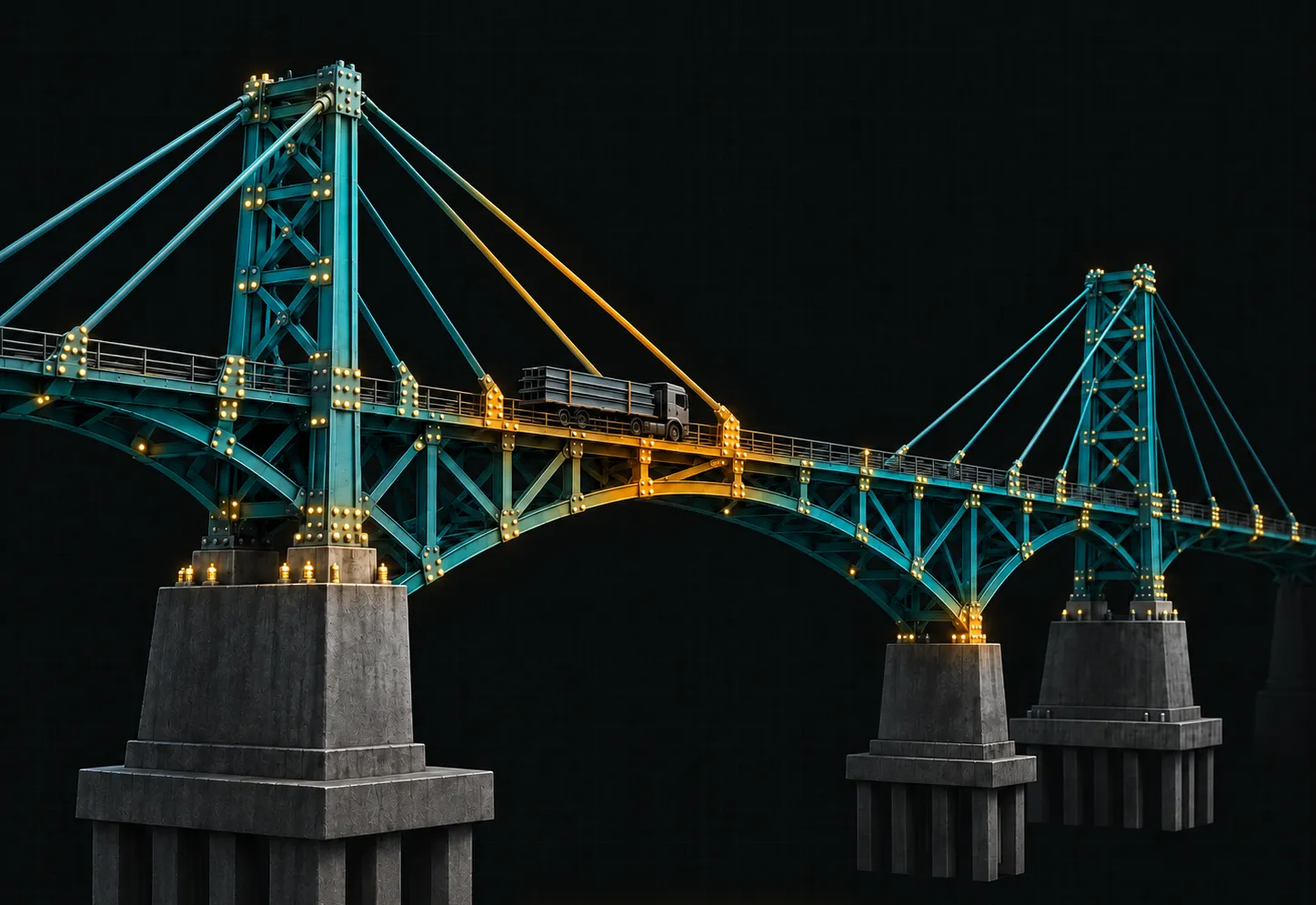
Bolts get found. Spans get connected to their bolts. The welds nobody can find the bolt behind get named, one by one. And the company ends up with something it has never had: drawings that match the bridge.
Then two things happen that have never happened before.
The truck gets weighed and the bridge gets rated, off the same iron, at the same time, before anyone drives. The CEO doesn’t believe the plan can cross. The CEO knows, and can show you each bolt and who signed for it.
And the inspection doesn’t stop when the truck starts moving. We keep watching the joints. If a beam starts to bend at the halfway point, you find out at the halfway point, while there’s still time to slow down, shift the load or back up. That’s the difference between a certificate and a policy.
Why now
Every company is changing itself faster than ever. Every employee with an AI tool is inventing their own way of doing things, at the speed of typing, with no one checking it against anything. The drawings are diverging from the bridge faster than they ever have. At exactly the same time, the cost of actually inspecting a bridge (asking the thousand questions, talking to every person, checking every answer) has collapsed, because the tools to do it have gotten cheap.
That’s also why the right advisors want to work with us. An independent advisor lives on referrals, and a referral comes when the truck makes it across, not when the kickoff goes well. They’ve been carrying crossings on their reputation and their judgment for years, because nobody handed them an instrument. We’re the instrument.
The bridges are getting less knowable. Knowing them is getting cheaper. That window is where we live.
The whole story in three lines
You don’t know what the truck weighs. You don’t know what the bridge holds. It’s the same iron, so let us inspect it, once, before you drive.